
How to Play Card Roulette: Rules, Bets & Strategy
Card roulette offers an exciting twist on traditional casino roulette by replacing the spinning wheel with a deck of specially designed cards. Instead of waiting for a ball to land on a number, players watch as a dealer draws cards that determine winning outcomes. This variation maintains all the betting options and excitement of regular roulette while providing a more portable and accessible gaming experience.

Card roulette uses a deck of cards numbered to match a roulette wheel, with each card draw determining the winning number and color for that round. The game follows similar rules to traditional roulette, allowing players to bet on individual numbers, colors, odd or even outcomes, and various number combinations. Players can enjoy the same strategic betting options and payout structures they know from casino roulette.
This card-based version appeals to both newcomers and experienced players because it combines familiar roulette gameplay with the convenience of cards. Whether played at home with friends or online, card roulette delivers the thrills of the casino floor without requiring a full roulette wheel setup. Understanding the basic rules, betting options, and available variations helps players maximize their enjoyment of this engaging alternative to traditional roulette.
What Is Card Roulette?

Card roulette replaces the traditional spinning wheel with a deck of specially designed cards to determine winning numbers. This variation maintains the same betting structure and payouts as classic roulette while offering a more portable and accessible gaming experience.
Differences Between Card-Based and Classic Roulette
The most obvious difference lies in how results are determined. Traditional roulette uses a spinning wheel and ball, while card-based roulette draws cards from a deck to find the winning number.
Equipment and Setup:
- Classic roulette requires a large wheel and table
- Card roulette needs only a deck of cards and betting layout
- Cards are numbered 1-36 plus zero (and double zero in American versions)
Randomness and Probability:
Card roulette operates with a finite deck, meaning drawn cards affect future outcomes. In traditional roulette, each spin is completely independent of previous results.
Players can track which cards have been played, adding a memory element that doesn’t exist in wheel-based games. This creates opportunities for card counting strategies.
Social and Physical Aspects:
The physical experience differs significantly between the two formats. Traditional roulette offers the excitement of watching the ball spin around the wheel. Card roulette provides a quieter, more intimate gaming atmosphere that works better in smaller spaces.
The Origins and History of Card Roulette
Card roulette emerged as a modern adaptation of traditional roulette, though its exact origins remain unclear. The variation likely developed to address practical limitations of wheel-based games in certain venues.
California’s Influence:
California casinos popularized card-based roulette due to state gaming regulations. These venues must use cards instead of wheels for roulette games, making this format widely accepted on the West Coast.
Practical Development:
The format gained popularity because cards are easier to transport and manage than roulette wheels. Online casinos also adopted card roulette as it translates well to digital platforms.
Modern Growth:
Card roulette has expanded beyond regulatory requirements to become a preferred option for home games and smaller establishments. The format appeals to players who enjoy the strategy elements that card-based games naturally introduce to traditional roulette mechanics.
Card Roulette Equipment and Table Setup

Card roulette uses a specialized deck of cards and modified table layout instead of a traditional spinning wheel. The equipment focuses on portability while maintaining the authentic roulette betting experience.
Card Roulette Wheel and Deck Explained
The card roulette game replaces the physical roulette wheel with a specially designed deck of cards. Each card represents a number found on a standard roulette wheel, typically including numbers 1 through 36 plus zero.
Standard card roulette decks contain 37 or 38 cards depending on the version. European-style games use 37 cards (0-36), while American versions include 38 cards (0, 00, 1-36).
Cards are color-coded to match roulette wheel colors. Red cards represent red numbers, black cards represent black numbers, and green cards represent zero positions.
Some variations include jokers as special cards. These jokers may serve as wild cards or represent bonus betting opportunities, though this varies by game rules.
The dealer shuffles the deck before each round and draws one card to determine the winning number. This card draw replaces the ball landing on the roulette wheel.
Roulette Table Layout for Card-Based Games
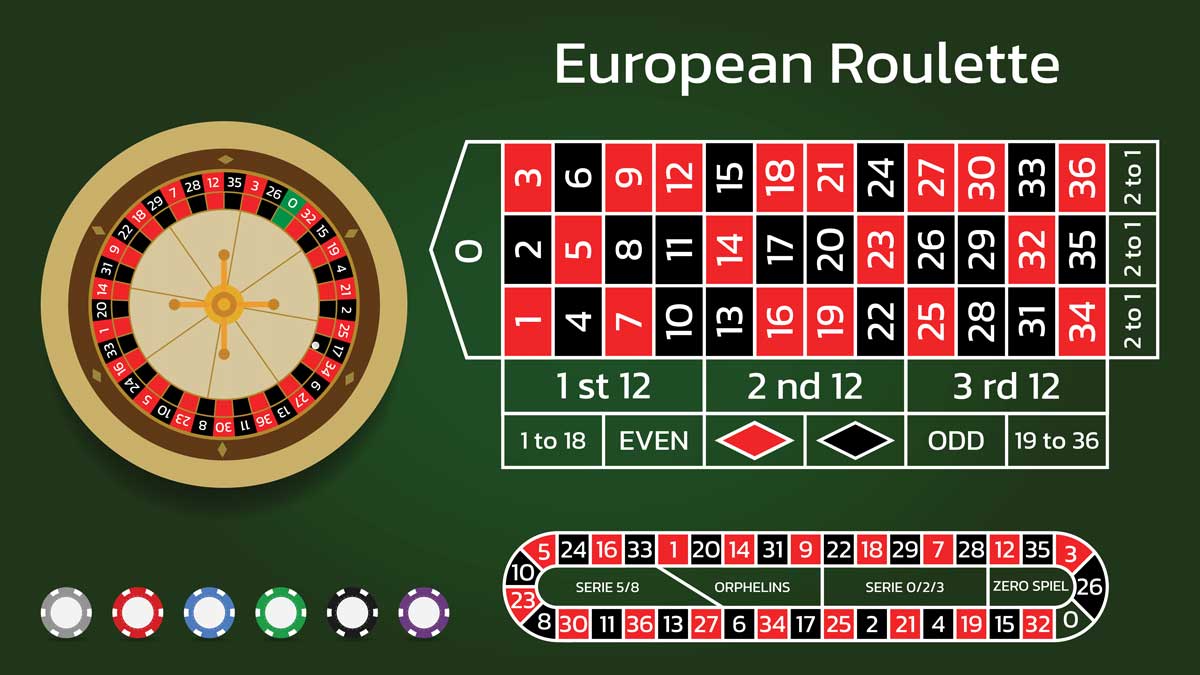
The roulette table layout for card games mirrors traditional roulette betting boards. Players place bets on the same numbered grid and betting sections found in standard roulette.
The layout includes all standard betting areas: individual numbers, red/black sections, odd/even options, and high/low ranges. Column and dozen bets remain available exactly as in wheel-based roulette.
Most card roulette tables are compact and portable. They can be printed on fabric mats, paper layouts, or built into gaming apps for online play.
Key betting sections include:
- Inside bets: Single numbers, splits, streets, corners
- Outside bets: Red/black, odd/even, high/low (1-18/19-36)
- Special sections: Dozens (1-12, 13-24, 25-36) and columns
The dealer position typically sits opposite the main betting area. This setup allows clear card visibility for all players during each draw.
How to Play Roulette with Cards: Step-By-Step
Card roulette follows a structured sequence where players place bets before cards are drawn, the dealer reveals the winning card from a specially numbered deck, and payouts are distributed based on traditional roulette odds. The process eliminates the spinning wheel while maintaining all familiar betting options and game mechanics.
Game Flow and Dealing Process
The dealer starts each round by shuffling the card deck thoroughly. Players must place their bets on the roulette layout before any cards are drawn.
The betting phase works exactly like traditional roulette. Players can bet on single numbers, colors, odd or even numbers, or groups of numbers. All standard roulette bets are available.
Once all players finish placing their bets, the dealer announces “no more bets.” This signals the end of the betting phase for that round.
The dealer then draws one card from the top of the shuffled deck. This card determines the winning number and color for the round.
Some card roulette games use multiple decks shuffled together. Others use a single deck that gets reshuffled after each draw.
The game moves at a steady pace. Each round typically takes 2-3 minutes from betting to payout.
Determining the Winning Card
Each card in the deck corresponds to a specific number on the roulette wheel. The card drawn becomes the winning result for that round.
The deck contains cards numbered 1 through 36, plus zero. Some versions include double zero depending on whether they follow American or European roulette rules.
Cards are color-coded to match roulette wheel colors. Red suits represent red numbers, while black suits represent black numbers. Zero cards are typically green or marked differently.
When the dealer draws a card, they announce the number and color clearly. For example, “Red 17” or “Black 22.”
The winning card determines all payouts for that round. Players who bet on the correct number, color, or group receive their winnings based on standard roulette payout rates.
Player Actions and Betting Sequence
Players place chips on the roulette layout during the betting phase. The layout includes all standard roulette betting options and sections.
Inside bets target specific numbers or small groups. These include straight-up bets on single numbers, split bets on two adjacent numbers, and corner bets covering four numbers.
Outside bets cover larger groups of numbers. Players can bet on red or black, odd or even, high numbers (19-36), or low numbers (1-18).
The minimum and maximum bet limits apply to each betting area. Players must follow these limits when placing their chips.
After the winning card is revealed, the dealer collects losing bets first. Then they pay out winning bets according to the standard payout table.
Players can change their betting strategy between rounds. They may increase, decrease, or move their bets to different areas of the layout.
Card Roulette Bets and Payouts
Card roulette offers the same betting structure as traditional roulette, with inside bets on specific numbers and outside bets on larger groups. The payout rates remain consistent with standard roulette odds to maintain fairness.
Inside Bets: Types and Odds
Inside bets focus on specific numbers or small groups of numbers on the card roulette layout. These bets offer higher payouts but have lower chances of winning.
Straight Up Bet targets a single number and pays 35 to 1. Players place chips directly on one number card.
Split Bet covers two adjacent numbers and pays 17 to 1. The bet goes on the line between two numbers.
Corner bets cover four numbers in a square formation. These pay 8 to 1 odds.
Street bets include three numbers in a row and pay 11 to 1. Players place chips at the end of any row.
Six-line bets cover two adjacent rows of three numbers each. The payout is 5 to 1.
The odds for inside bets depend on how many numbers the bet covers. More numbers mean better winning chances but lower payouts.
Outside Bets in Card-Based Roulette
Outside bets cover larger groups of numbers and offer better winning chances. These bets pay less but win more often.
Red or Black bets win when the drawn card matches the chosen color. These pay 1 to 1 odds.
Odd or Even bets pay 1 to 1 when the card number matches the selection.
High and low bets divide numbers 1-18 and 19-36. Both pay even money at 1 to 1 odds.
Dozen bets cover numbers 1-12, 13-24, or 25-36. These pay 2 to 1 odds.
Column bets cover one of three vertical columns on the layout. They also pay 2 to 1.
Outside bets lose when zero cards appear, just like traditional roulette. This gives the house its edge in card roulette games.
Payouts for Card Roulette Bets
Card roulette uses the same payout structure as wheel-based roulette. This keeps the game familiar while maintaining proper odds.
| Bet Type | Numbers Covered | Payout |
|---|---|---|
| Straight Up | 1 | 35:1 |
| Split | 2 | 17:1 |
| Street | 3 | 11:1 |
| Corner | 4 | 8:1 |
| Red/Black | 18 | 1:1 |
| Odd/Even | 18 | 1:1 |
| Dozens | 12 | 2:1 |
Inside bet payouts range from 5 to 1 up to 35 to 1. The more specific the bet, the higher the payout.
Outside bet payouts are lower but win more frequently. Most pay 1 to 1 or 2 to 1 odds.
Zero cards cause all outside bets to lose. Inside bets only win if they specifically include zero.
Players should understand that card roulette maintains the same house edge as traditional roulette. The betting options and roulette payouts create identical mathematical advantages for the house.
Popular Variations of Card Roulette
Card roulette comes in several distinct variations that mirror traditional roulette formats. The main differences lie in the number of zero cards included and specific betting rules that affect player odds.
American Card Roulette
American card roulette uses a deck that includes both 0 and 00 cards along with numbers 1-36. This creates a total of 38 possible outcomes per draw.
The double zero gives the house a higher edge compared to other variations. Players face a 5.26% house advantage on most bets.
The betting layout matches traditional American roulette tables. Players can place inside bets on single numbers, splits, and corners. Outside bets include red/black, odd/even, and dozens.
Key features of American card roulette:
- 38 cards total (1-36, 0, 00)
- Higher house edge
- Same payout structure as wheel-based American roulette
- Most common variation in US casinos
The presence of two zero cards reduces winning odds on all bets. A straight number bet pays 35:1 but has only a 1 in 38 chance of winning.
European Card Roulette
European card roulette uses 37 cards numbered 0 through 36. The absence of a double zero card makes this variation more favorable for players.
The house edge drops to 2.70% with only one zero card. This gives players better long-term odds compared to the American version.
All standard roulette bets apply in this format. The single zero appears in green while numbers 1-36 alternate between red and black cards.
Betting options include:
- Single numbers (35:1 payout)
- Color bets (1:1 payout)
- Even/odd bets (1:1 payout)
- Dozens and columns (2:1 payout)
European card roulette often includes the “en prison” rule. When the zero card appears, even-money bets may be held over for the next round instead of losing immediately.
California Card Roulette
California card roulette exists due to state laws that prohibit traditional roulette wheels. All roulette games in California casinos must use cards instead of spinning wheels.
The game uses a standard 38-card deck representing American roulette numbers. Cards get shuffled between rounds using automatic shuffling machines.
California-specific features:
- Mandatory card-based format
- Rapid shuffling between draws
- Same betting options as traditional roulette
- Often played at faster speeds
Some California casinos use multiple decks or special card dispensing systems. The randomness comes from card shuffling rather than wheel physics.
Players face the same 5.26% house edge as American roulette. The only difference lies in how the winning number gets determined through card draws instead of ball placement.
Strategies and Tips for Success
Card roulette requires specific money management skills and strategic approaches that differ from traditional wheel roulette. Players must understand variance patterns and implement proven betting systems to maximize their chances of success.
Bankroll Management for Card Roulette
Setting limits forms the foundation of successful card roulette play. Players should never risk more than 5% of their total bankroll on a single session.
A typical bankroll structure looks like this:
- Session limit: 10-15% of total bankroll
- Loss limit: 50% of session bankroll
- Win goal: 25-30% of session bankroll
Unit sizing becomes critical in card roulette. Players should use 1-2% of their bankroll as their base betting unit. This approach protects against losing streaks while allowing room for strategy implementation.
Card roulette moves faster than wheel roulette. Players must track their spending more carefully since cards are dealt quickly. Setting time limits helps prevent emotional decisions that can drain bankrolls.
Separate gambling funds from living expenses. This creates clear boundaries and prevents financial problems. Players who mix gambling money with bill money often make poor decisions under pressure.
Effective Card Roulette Strategies
The Paroli system works well for card roulette because it limits losses while capitalizing on winning streaks. Players double their bet after each win for up to three consecutive victories, then reset to the base bet.
D’Alembert strategy offers a balanced approach. Players increase bets by one unit after losses and decrease by one unit after wins. This method provides steady progression without the extreme risk of doubling systems.
Outside bets remain the safest option in card roulette:
- Red/Black: Nearly 50% chance of winning
- Odd/Even: Similar odds with consistent payouts
- High/Low: 1-18 or 19-36 number ranges
Inside betting should be limited to small portions of the bankroll. Single number bets pay 35:1 but hit rarely. Players can use these sparingly for excitement while focusing on safer outside bets.
The flat betting approach means wagering the same amount on every spin. This strategy maximizes playing time and minimizes variance, making it ideal for beginners.
Managing Variance and Probability
Card roulette uses the same probability structure as traditional roulette. Each spin remains independent, meaning previous results don’t influence future outcomes.
Variance understanding helps players prepare for natural winning and losing streaks. Even with perfect play, short-term results can vary significantly from expected outcomes.
Players should expect to lose about 2.7% of their total bets over time with European rules. American rules increase this to 5.26% due to the double zero.
Hot and cold streaks are normal mathematical occurrences. Smart players don’t chase losses or increase bets dramatically during cold streaks. They also avoid getting overconfident during hot streaks.
Session tracking helps identify patterns in personal play. Players should record wins, losses, and session length to spot trends in their decision-making.
The gambler’s fallacy causes many players to make poor choices. Just because red hit five times doesn’t mean black is “due” to hit. Each card drawn maintains the same probability as the previous draw.
Card Roulette Online: How and Where to Play
Card roulette has made its way into the digital world through online casinos and gaming platforms. Players can find multiple variations at established casino sites, with different betting options and payout structures compared to traditional land-based venues.
Top Online Casinos for Card Roulette
Several major online casinos now offer card roulette alongside their standard table games and slots. 888 Casino features its own unique version of card roulette that differs from typical European or American roulette adaptations.
GTECH has developed card roulette games available on multiple platforms. These games combine traditional roulette betting with card-based mechanics.
Many sites offer card roulette as part of their table games section. Players should look for casinos that provide:
- Free play options to learn the rules
- Multiple betting limits
- Mobile compatibility
- Live dealer versions
California casinos often feature card roulette using 38-card decks. This version includes single and double zero cards, similar to American roulette numbering.
Some platforms offer card roulette as flash games. These require no download and run directly in web browsers.
Playing Card Roulette Online vs. Land-Based
Online card roulette offers several advantages over physical casino versions. Digital games are available 24/7 without travel requirements or dress codes.
Online versions typically use random number generators instead of physical card draws. This ensures fair outcomes but changes the game feel compared to watching actual cards.
Land-based card roulette provides social interaction with dealers and other players. The physical card-drawing process adds excitement that digital versions may lack.
Betting limits online are often lower than in physical casinos. This makes the game accessible to casual players with smaller bankrolls.
Online platforms offer demo modes. Players can practice without risking real money before playing for cash.
Digital card roulette games load faster than traditional roulette wheels. Rounds complete quickly, allowing more hands per hour.
Safety and Fairness in Online Card Roulette
Licensed online casinos use certified random number generators for card roulette games. These systems undergo regular testing by independent auditing companies.
Reputable sites display their licensing information clearly. Look for licenses from Malta Gaming Authority, UK Gambling Commission, or similar regulatory bodies.
Secure payment methods protect player funds during deposits and withdrawals. Most legitimate casinos offer encrypted transactions and multiple banking options.
Players should verify that card roulette games show return-to-player percentages. This information helps understand the house edge and expected payouts.
Responsible gambling tools are essential features. Quality online casinos provide deposit limits, session timers, and self-exclusion options for card roulette players.
Customer support should be available through multiple channels. Live chat, email, and phone support help resolve any issues with card roulette gameplay or account management.
Frequently Asked Questions
Card roulette brings up many questions for new players since it mixes traditional roulette betting with card-based gameplay. Players often wonder about rule differences, betting strategies, and how the house edge compares to standard roulette.
What are the basic rules for playing card-based roulette?
Card roulette uses a deck of specially numbered cards instead of a spinning wheel. The cards represent numbers 1 through 36, plus zero and sometimes double zero.
Players place bets on a layout that matches a traditional roulette table. The dealer shuffles the deck and draws one card to determine the winning number.
Each card corresponds to both a number and a color, just like spaces on a roulette wheel. Red and black designations are assigned to specific cards in the deck.
The game follows the same betting structure as regular roulette. Players can make inside bets on specific numbers or outside bets on groups of numbers.
Can you explain the betting options in card roulette?
Card roulette offers the same betting options as traditional roulette. Players can bet on single numbers, which pay 35 to 1 when they win.
Outside bets include red or black, odd or even, and high or low numbers. These bets pay even money, meaning they double the player’s wager.
Column bets and dozen bets are also available. These cover 12 numbers each and typically pay 2 to 1.
Players can place multiple bets on each round. The betting options remain consistent with standard roulette rules and payouts.
What are the differences between card roulette and wheel roulette?
The main difference is the method of determining winning numbers. Card roulette uses drawn cards while traditional roulette uses a spinning ball and wheel.
Card roulette creates a finite set of outcomes since cards are drawn from a limited deck. Traditional roulette produces truly random results with each spin.
The physical setup differs significantly between the two games. Card roulette only needs cards and a betting layout, making it more portable.
Card roulette can introduce memory elements since players might track which cards have been played. Traditional roulette spins are completely independent of previous results.
How does the house advantage compare in card roulette versus traditional roulette?
The house edge in card roulette depends on how the game is structured. Many versions maintain the same house advantage as traditional roulette.
Single-zero card roulette typically offers a house edge around 2.7 percent. Double-zero versions usually have a house edge of about 5.26 percent.
Some card roulette variants may adjust payouts or rules that can change the house advantage. Players should check the specific rules before playing.
The house edge calculation remains based on the same mathematical principles. The presence of zero cards creates the casino’s advantage in both versions.
What strategies can be used when playing card roulette?
Basic roulette strategies like the Martingale system can be applied to card roulette. These systems focus on bet sizing and progression patterns.
Card counting might be possible in some card roulette games if cards are not reshuffled frequently. This strategy requires tracking which cards have been played.
Players can focus on outside bets to reduce risk and extend playing time. These bets have better odds but lower payouts.
Money management remains the most important strategy in card roulette. Players should set limits and stick to predetermined betting amounts.
How are the winning numbers determined in card roulette?
The dealer shuffles the deck thoroughly before each session begins. One card is drawn from the deck to determine the winning number for each round.
The drawn card shows both the winning number and its corresponding color. This information determines all winning and losing bets for that round.
Some versions reshuffle the deck after each draw while others continue until the deck runs out. The specific rules vary by game variation.
Electronic versions use random number generators to simulate card draws. These systems ensure fair and random outcomes for each round.